
Stop Applying With Just a CV: Why Every Student Needs a Digital Portfolio
Imagine finding a job opportunity, internship, freelance project, or business opportunity you've been waiting for.
You apply, and the recruiter asks you a simple question:
"Can you share your portfolio or show us what you can do?"
You search through your phone for scattered certificates, old projects, and documents. Your work is there, but it's not organized. You have the skills, but you don't have a professional way to showcase them.
Meanwhile, another candidate shares a single link.
The recruiter opens their personal website, sees their experience, projects, skills, CV, and social profiles, and immediately gets a clearer picture of who they are.
Which candidate makes it easier for an opportunity to discover their potential?
Welcome to the digital world, where your qualifications matter, but how you present your skills and experience can also influence how people perceive your professional readiness.
1. Your Degree Is Not the Entire Story
Graduating from college or university is a significant achievement. But your certificate is only one part of your professional identity.
Employers, clients, and business partners may want to understand what you can actually do. They may ask about your projects, practical experience, technical skills, creativity, or previous work.
Whether you're a software developer, graphic designer, marketer, photographer, accountant, or aspiring entrepreneur, a portfolio gives you a place to demonstrate your capabilities beyond a list of qualifications.
You might have:
- School projects you worked hard on.
- Personal projects you created outside class.
- Internship or volunteer experience.
- Skills you developed independently.
- Certifications and professional achievements.
- Work samples that demonstrate your abilities.
But if these accomplishments remain hidden in your laptop, email, or phone, people who could benefit from your skills may never see them.
Your skills deserve a place where people can discover them.
2. The Digital Job Market Is Changing. Are You Ready?
The way people discover talent, evaluate candidates, and connect with professionals continues to evolve.
Digital communication, online applications, professional networking, and remote opportunities have made it increasingly important to have information about your skills available online.
Some employers and clients may request a CV, portfolio link, GitHub profile, LinkedIn profile, or examples of your previous work.
Now imagine being asked:
"Send me your portfolio."
Instead of searching for documents or sending multiple attachments, you share one professional link that brings your information together.
That is the experience a digital portfolio can help you create.
It doesn't guarantee an interview or employment. However, it can make it easier for people to access your work, understand your capabilities, and consider you for relevant opportunities.
3. What Happens When You Don't Have a Portfolio?
Let's be honest.
Many students wait until they need a job before they start building their professional presence.
They wait until graduation. They wait until an employer requests their CV. They wait until a business opportunity appears.
And by that time, they may be rushing to put everything together.
Meanwhile, other students are already documenting their projects, building their online profiles, publishing their work, and making it easier for people to find them.
The opportunity you want tomorrow may require preparation today.
Having a portfolio doesn't mean you're ahead of everyone, and not having one doesn't mean you cannot succeed.
But building your professional presence early can help you avoid being unprepared when a relevant opportunity comes your way.
4. Your Portfolio Is More Than a Digital CV
A traditional CV is useful. It summarizes your education, skills, experience, and achievements.
But a digital portfolio can give people a more complete picture of your professional identity.
With a personal mini website, you can bring together:
- Your professional introduction: Tell people who you are and what you do.
- Your skills: Highlight the abilities you have developed.
- Your projects: Showcase your schoolwork, personal projects, and practical experience.
- Your experience: Present internships, volunteer work, freelance work, and relevant activities.
- Your CV: Allow visitors to view or download your resume.
- Your social profiles: Connect people to your professional social media accounts.
- Your contact details: Make it easier for potential employers, clients, and collaborators to reach you.
Instead of sharing information across different platforms, you can create a central place where people can learn about you.
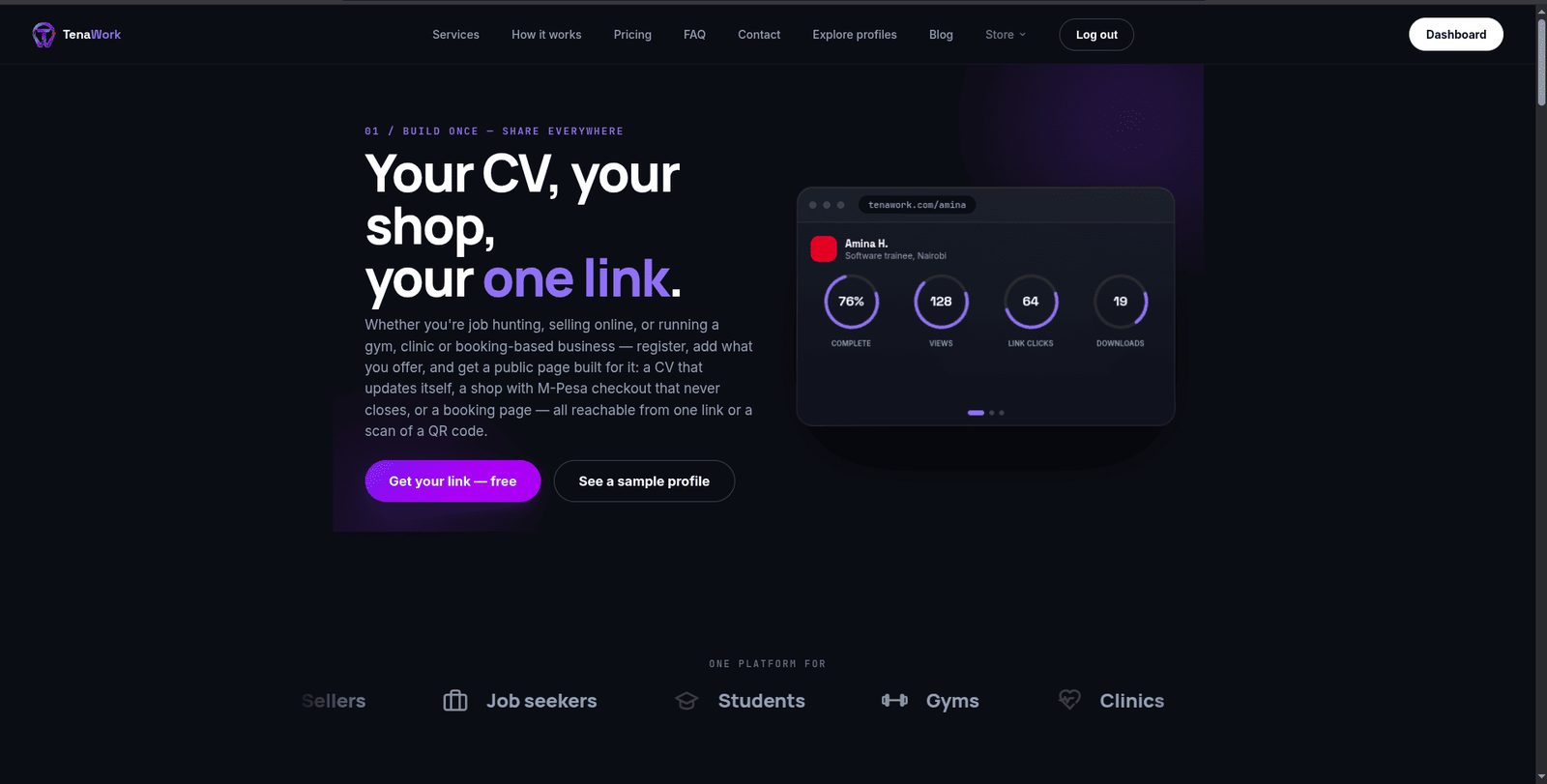
5. Meet TenaWork: Your Professional Identity, Your Website
At TenaWork, we believe students and young professionals should have access to a digital space where they can showcase their skills, experience, and potential.
That's why TenaWork allows you to create your own mini website inside the platform.
Your portfolio isn't just a page that someone else controls for you. You create your profile, organize your information, and manage your digital presence through your TenaWork account.
Whether you're a university student, a fresh graduate, a freelancer, or someone building practical experience, you can create a professional online presence that grows with you.
What Can You Showcase on Your TenaWork Portfolio?
- Your academic background and qualifications.
- Projects and work samples.
- Your professional CV and resume.
- Your skills and experience.
- Your social media links.
- Your professional introduction.
- Relevant contact information.
When someone asks you to share your portfolio, you can provide your TenaWork website link and direct them to your professional information in one place.
6. A Portfolio Can Help You Become More Visible to Opportunities
Let's make something clear:
A portfolio does not automatically get you a job.
Your qualifications, skills, experience, interview performance, and the requirements of the opportunity still matter.
However, a well-organized portfolio can help you present your capabilities more clearly. It can give employers, clients, and collaborators another way to understand your background and review your work.
Consider these situations.
Applying for an Internship
You're a student applying for a software development internship.
Alongside your CV, you share a portfolio containing your school projects, applications you've built, and links to relevant work.
The recruiter can explore examples of your work instead of relying solely on the skills listed on your CV.
Searching for Your First Job After Graduation
You've graduated but have limited formal employment experience.
Your portfolio allows you to showcase academic projects, volunteer work, certifications, and personal initiatives that demonstrate your willingness to learn and your practical abilities.
Looking for Freelance Opportunities
You're a graphic designer, photographer, developer, writer, or other creative professional.
A potential client wants to see examples of your work before contacting you.
Your portfolio provides a central place to showcase your services and work samples.
In each case, the portfolio supports your application or introduction. It doesn't replace qualifications or guarantee a positive decision.
7. Don't Wait Until You Need a Portfolio
One of the biggest mistakes students make is treating their professional identity as something they should build after graduation.
You don't have to wait until you have ten years of experience.
You don't need to work for a major company before you can start documenting your journey.
Your first project matters.
Your first certification matters.
Your first internship matters.
The skills you develop while studying matter.
You can start with what you have and continue improving your portfolio as you gain experience.
Your portfolio should grow alongside your career.
Today, you may be a student.
Tomorrow, you could be a graduate, freelancer, business owner, or industry professional.
Creating your digital presence early gives you a foundation that you can continue developing.
8. Take Control of Your Professional Identity
What happens when someone searches for your name online?
Does someone who wants to work with you find a clear picture of your skills and experience?
Or do they have to piece together your professional background from different platforms and documents?
With TenaWork, you can create a mini website designed to bring your professional information together.
You control the information you choose to showcase, update your details as you grow, and share your website when connecting with potential employers, clients, and collaborators.
Instead of repeatedly explaining who you are and what you can do, your portfolio can help introduce you.
9. Your Next Opportunity May Start With One Link
There is no guarantee that creating a portfolio will lead to employment.
But failing to showcase your skills can make it harder for people to discover the work you have done.
In a world where digital profiles, online applications, and professional connections are part of how people discover opportunities, having a central place for your professional information can be a practical step.
Don't wait until someone asks you for your portfolio to start thinking about what you want people to see.
Start building your professional identity now.
Document your skills.
Showcase your work.
Organize your experience.
Make it easier for opportunities to discover what you can do.
Build Your Student Portfolio With TenaWork
Whether you're still in college, preparing for graduation, or already searching for your first opportunity, TenaWork gives you a place to create your own professional mini website.
Showcase your skills, projects, experience, CV, and social links in one place. Create a digital presence that you can continue updating as you grow.
Your degree tells part of your story. Your portfolio helps you show what you can do.
Don't wait for the perfect opportunity before you start preparing for it.
Create your TenaWork portfolio today and take the next step toward building your professional digital identity.
Create Your Portfolio Today
Build your professional digital identity with TenaWork and put your CV, skills, experience, projects, and social links in one place.
Create Your Portfolio on TenaWork →
Frequently Asked Questions
1. Do students need a portfolio even if they have no work experience?
Yes. Students can showcase academic projects, personal projects, certifications, volunteer activities, and skills they've developed. A portfolio can grow as they gain more experience.
2. Can a portfolio replace my CV?
A portfolio and CV serve different purposes. Your TenaWork website can include your CV, allowing you to share both your resume and additional professional information in one place.
3. Will a TenaWork portfolio guarantee me a job?
No. A portfolio does not guarantee employment. It can help you present your skills, experience, and work more clearly when applying for relevant opportunities.
4. Can I update my portfolio after creating it?
TenaWork is designed to let you manage your mini website and update your professional information as your experience and skills develop.
5. Who can use TenaWork?
TenaWork supports different types of users, including students, professionals, businesses, and service providers who want to create a digital presence.